FrameWorks Design System Reusable component architecture built for multi-team scale
IMPACT
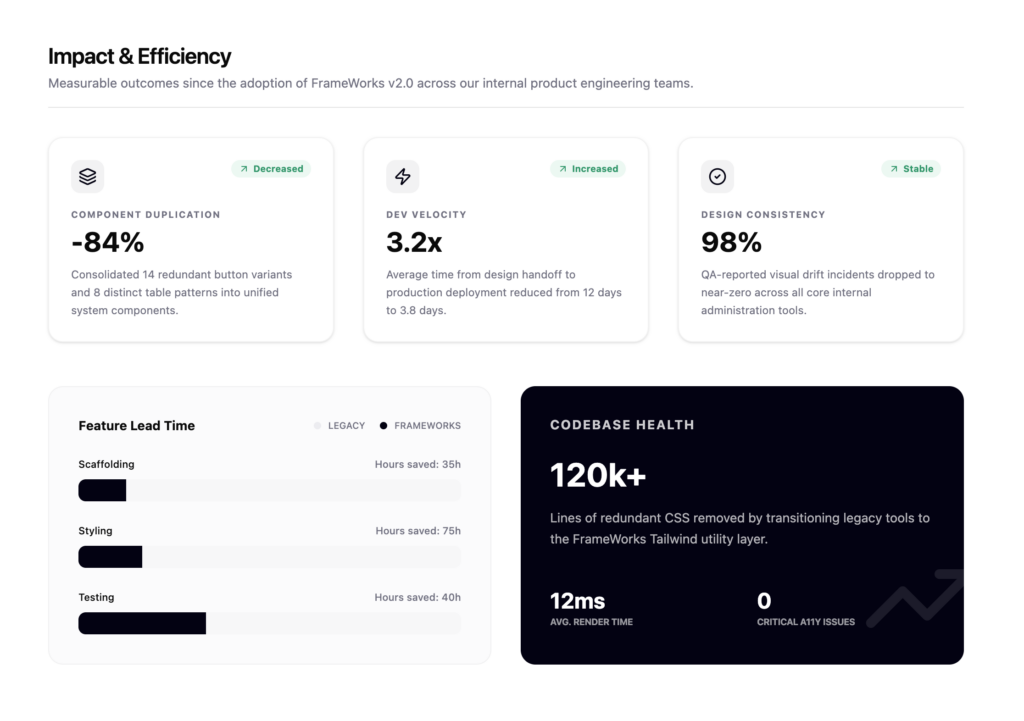
84% Reduction in Component Duplication
3.2x Faster Dev Handoff to Production
98% Design Consistency Across Internal Tools
120K+ Lines of Legacy CSS Removed
Zero Critical Accessibility Regressions Post-Migration
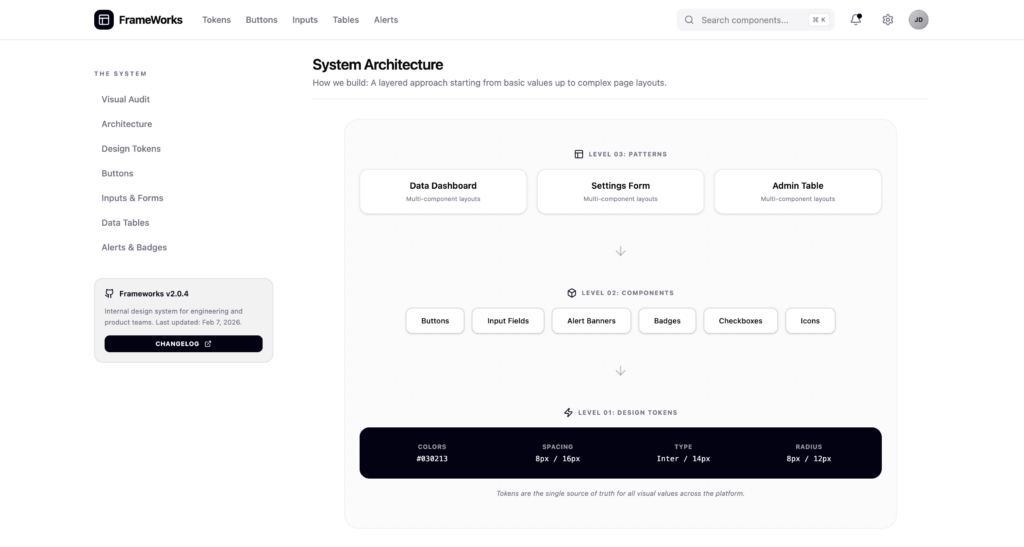
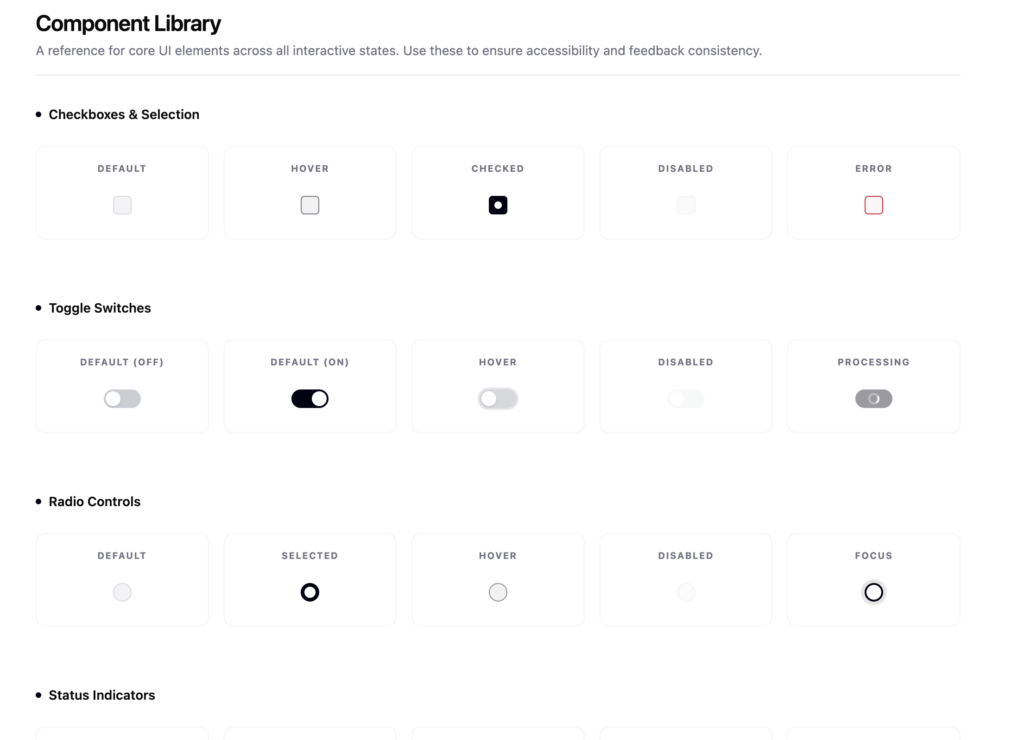
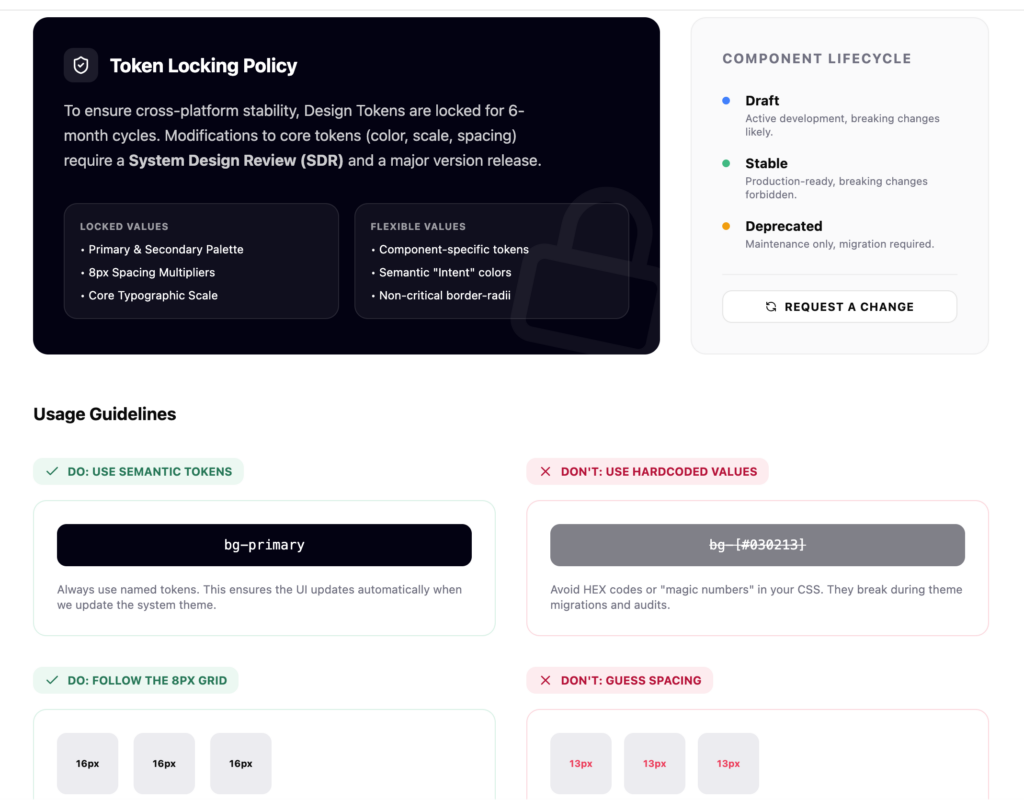
Company: FrameWorks Focus: Design systems for internal product platforms Context: Multi-team engineering environment Evidence: Reusable components, shared tokens, governance rules
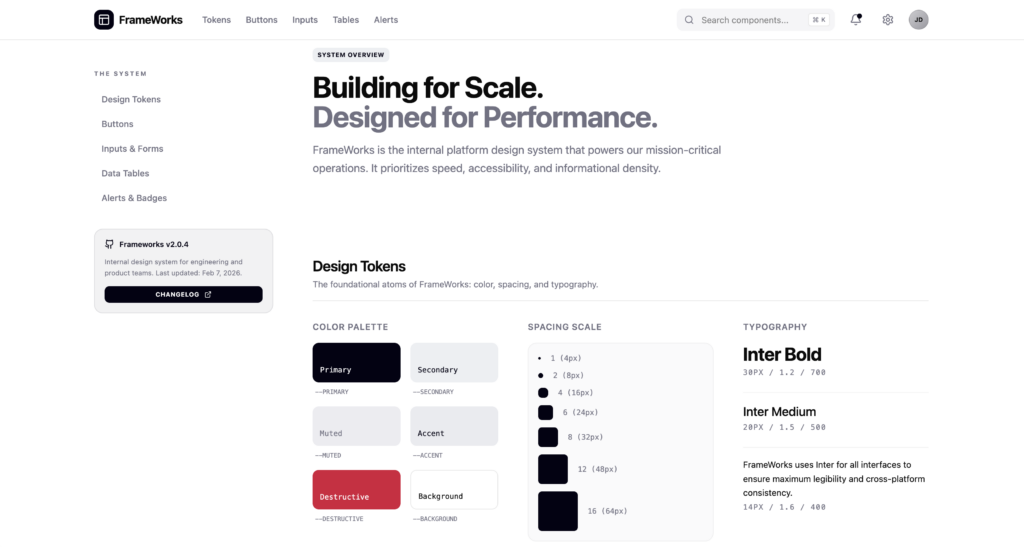
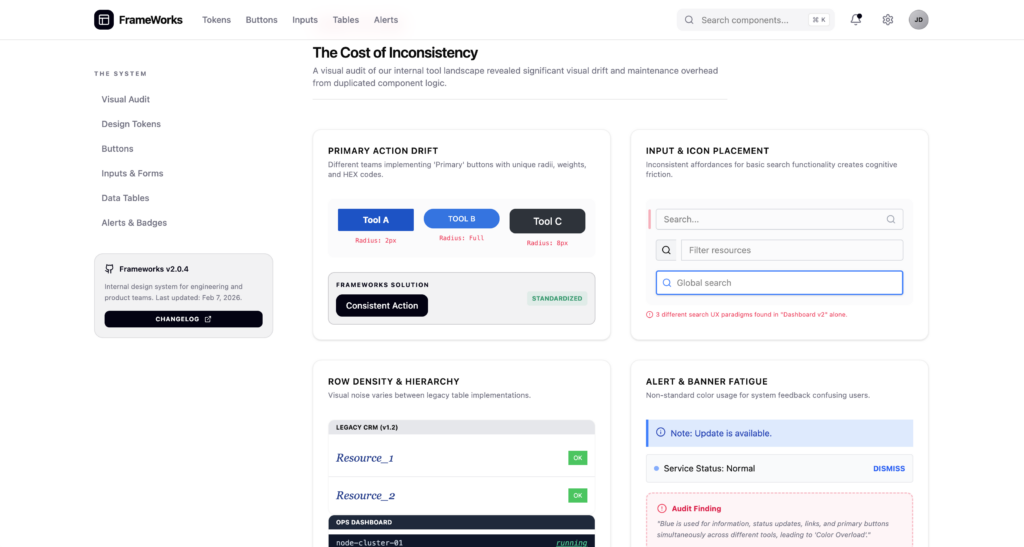
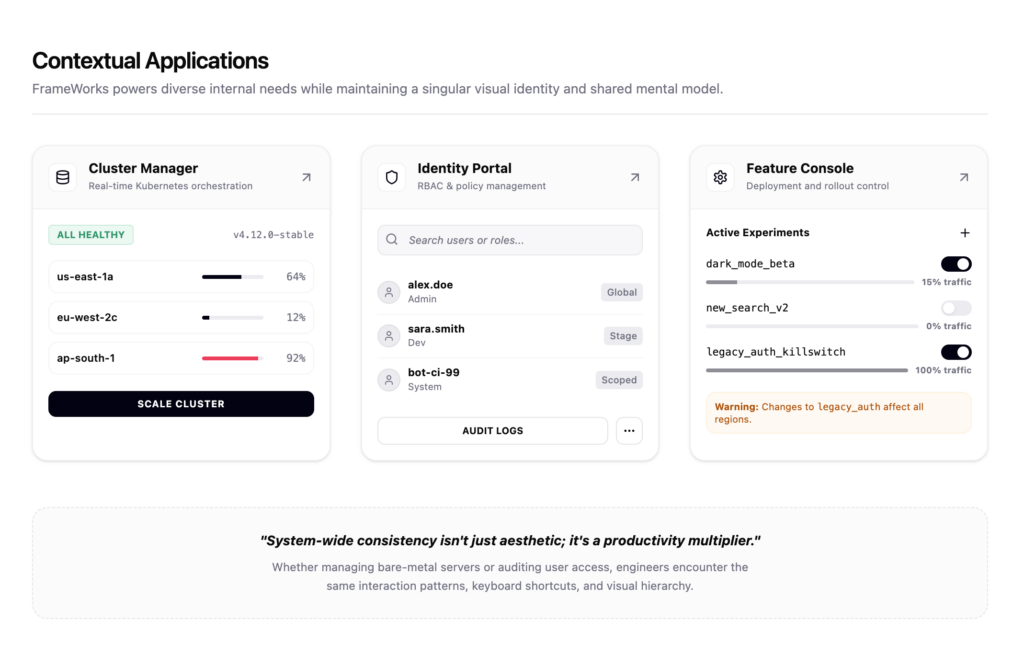
FrameWorks was built to reduce duplication and enforce consistency across internal tools. Teams were solving similar UI problems in different ways, which slowed development and increased long-term maintenance cost.
Primary buttons, alerts, and row density varied across tools. This created cognitive load and slowed onboarding.