
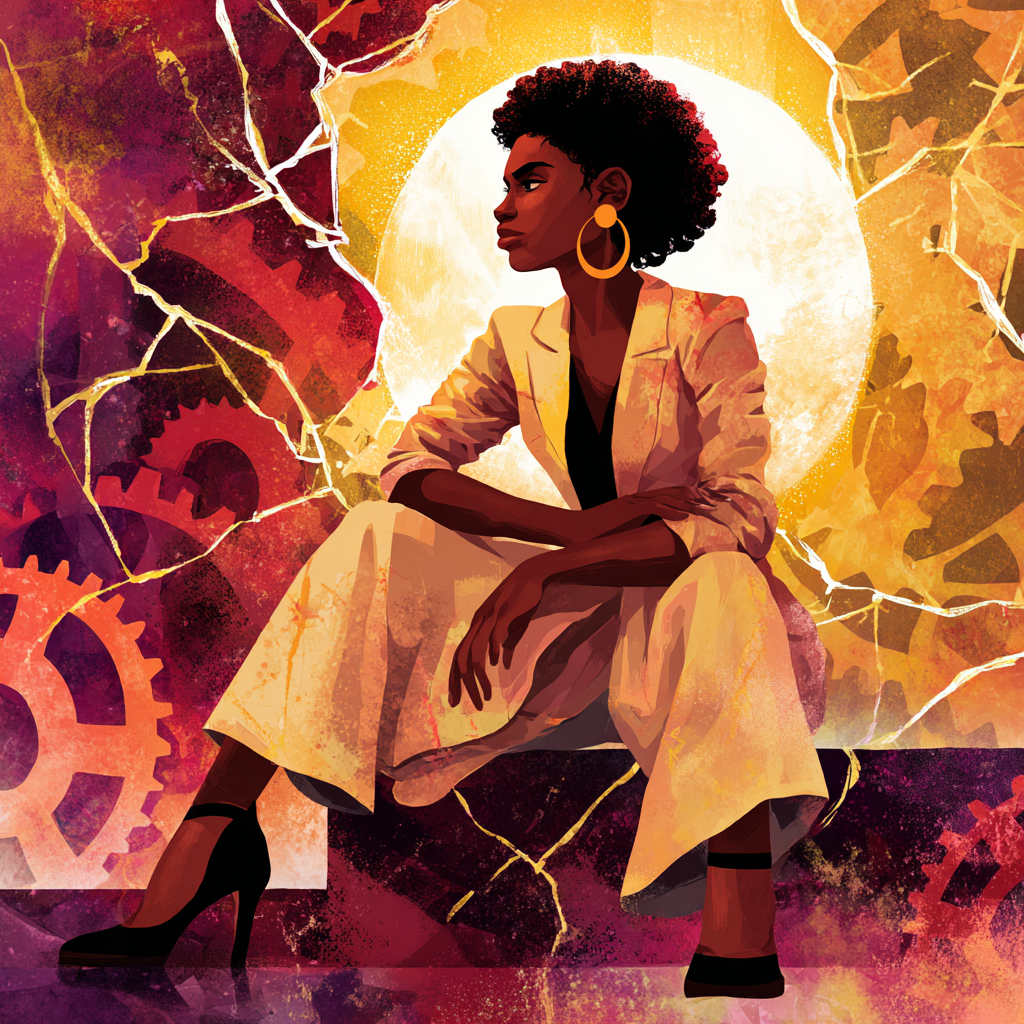
Something stopped working this week. I won’t tell you what. But I will tell you that my first instinct was to blame myself.
That’s the thing nobody talks about. When systems break, we break with them. And then we turn inward.
I’ve watched it happen in real time. A project goes sideways and suddenly everyone’s looking through pictures. The homeowner gets anxious. The team starts whispering. And somewhere in all of that, the actual problem — the broken process, the unclear expectation, the thing nobody documented — just sits there quietly, completely unbothered, while the humans take the heat.
We do this constantly.
When your car won’t start, you don’t question your character. You pop the hood. You check the battery. You assume something underneath failed and you go looking for it.
But when a workflow collapses? When a relationship gets tense? When you can’t seem to get it together no matter how hard you try?
We go straight to what’s wrong with me.
And baby, sometimes nothing is wrong with you. Sometimes the system was just badly built.
I’ve been thinking about this a lot lately — how much of what we call “burnout” is actually just friction we’ve learned to absorb. How much of what we call “overwhelm” is really just unexamined design. How many of us are running full speed inside a process that was never built for real life, real stress, real people.
Because here’s the truth: most systems are designed for ideal conditions. Perfect timing. Clear instructions. Everyone present, aligned, and having a great day.
Real life does not operate under ideal conditions.
Real life shows up tired. Real life has a sick kid at home and an inbox full of things that needed responses yesterday. Real life asks clarifying questions at the “wrong” time and gets called difficult for it.
If your process falls apart the moment one person is out of office — it was never stable. If communication breaks down because someone needed more context — it was never resilient. We just called it human error because that was easier than fixing the structure.
And here’s where it gets personal.
We inherit broken systems emotionally too. Unspoken rules passed down through families, workplaces, relationships. Roles we were assigned before we were old enough to consent to them. Beliefs about what we should need, how much space we’re allowed to take up, whether it’s okay to say this isn’t working for me.
We adapt. We cope. We smile through it.
Until something snaps. And then we call ourselves the problem.
But what if the overwhelm isn’t weakness? What if it’s just friction nobody bothered to fix?
Redesigning something — really redesigning it — takes a particular kind of courage. Because it means admitting that what existed before wasn’t working. Even if everyone adapted to it. Even if it’s been “fine” for years. Even if you were the one who built it.
The strongest systems aren’t the ones that never break. They’re the ones built with breakdowns in mind. With backup plans. With grace for the human inside them.
So here’s what I keep coming back to:
Where am I blaming myself for something that was actually a design flaw?
And what would change — really change — if I decided to rebuild it instead of just endure it?
You don’t have to keep running on a broken engine. You’re allowed to pop the hood.