
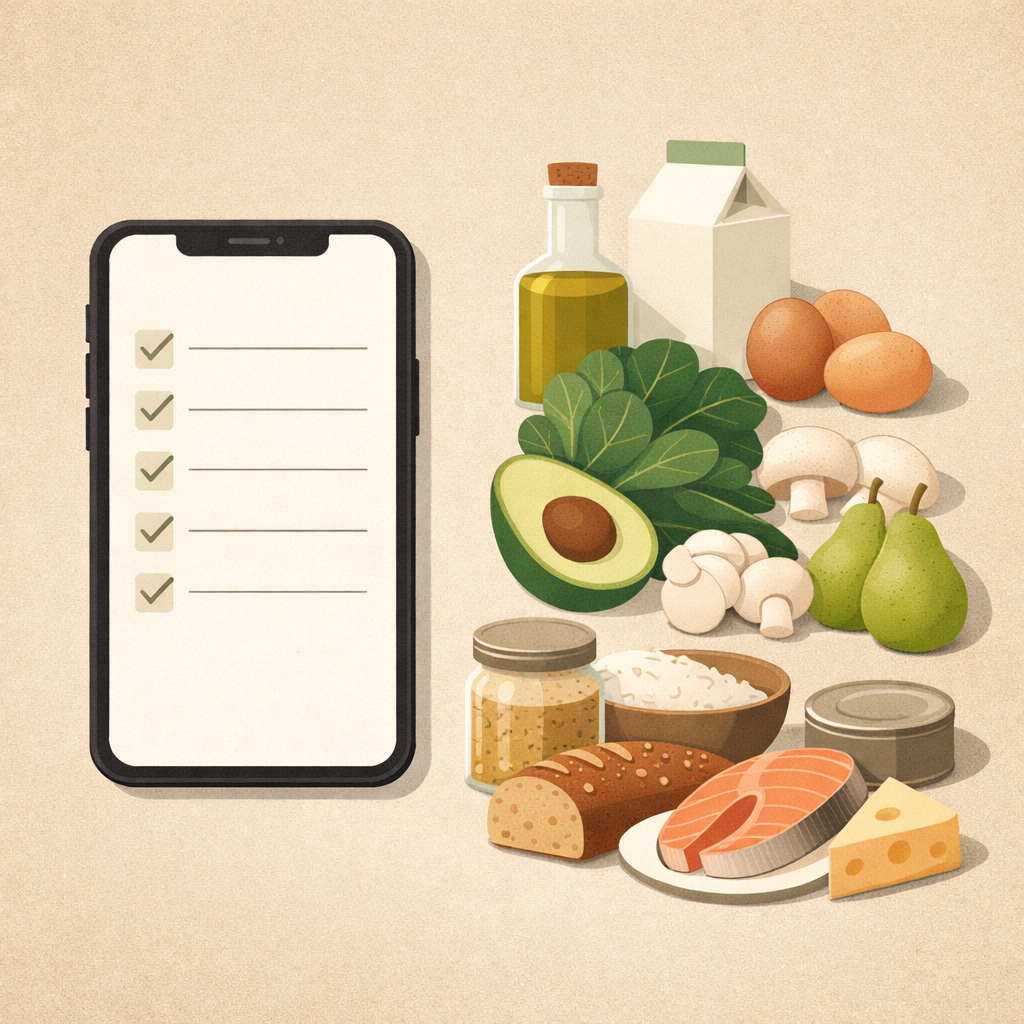
I’ve been thinking a lot about design systems lately. How they create consistency, reduce decision fatigue, and make future work easier. And somewhere between reviewing component libraries and planning my week, I realized something: I’ve been building a design system for my grocery list.
Stay with me here.
Every week I sit down and map out what I need. But it’s not a random brain dump. It’s organized by category: produce, proteins, pantry staples, household essentials. Each category lives in the same order every single time. Produce always comes first because that’s the first section I hit when I walk into the store. Dairy is last because I don’t want my oat milk getting warm while I’m debating between jasmine rice and basmati.
Sound familiar? That’s hierarchy. That’s user flow.
Just like a design system, my grocery list has reusable patterns. Core components, the things that show up every week no matter what. Eggs. Spinach. Coffee. Reliable, predictable, non-negotiable. These are my buttons, my input fields, my foundational elements.
Then there are the variants. Seasonal swaps, one-off additions, experimental purchases. Maybe it’s a new hot sauce or fresh basil because I’m feeling ambitious about pasta this week. Flexible, but still following the system.
I even account for edge cases. What if the store is out of my usual brand? I’ve built in backup options, alternative items I know I’ll accept. Same logic I use when designing for error states and fallback experiences. Plan for the unexpected so it doesn’t derail the whole thing.
The real magic? It saves time and mental energy. I don’t stand in the middle of the store wondering what I need. I don’t get home and realize I forgot something critical. The structure does the work so I can focus on what actually requires thought, like whether I want to meal prep or wing it this week.
Design systems work the same way. They free up cognitive load. Let teams move faster because the foundational decisions have already been made. You’re not reinventing the wheel every time you need a button or a form field. You’re pulling from a shared library and saving your brain power for the problems that actually need solving.
And good systems evolve. My grocery list isn’t static. I used to organize by meal, breakfast, lunch, dinner, but that created overlap and confusion. So I switched to categories and it stuck. Iteration is built into the process. Same as any design system worth using.
So yes, I organize my grocery list like a design system. And it makes me better at both.
Because whether I’m shopping for oat milk or building a component library, the principles are the same. Consistency, structure, flexibility, and a little bit of care for the person on the other side of the experience. Even when that person is me.
Whitney Cullens is a product designer who finds the system in everything, and the feeling in every system.